
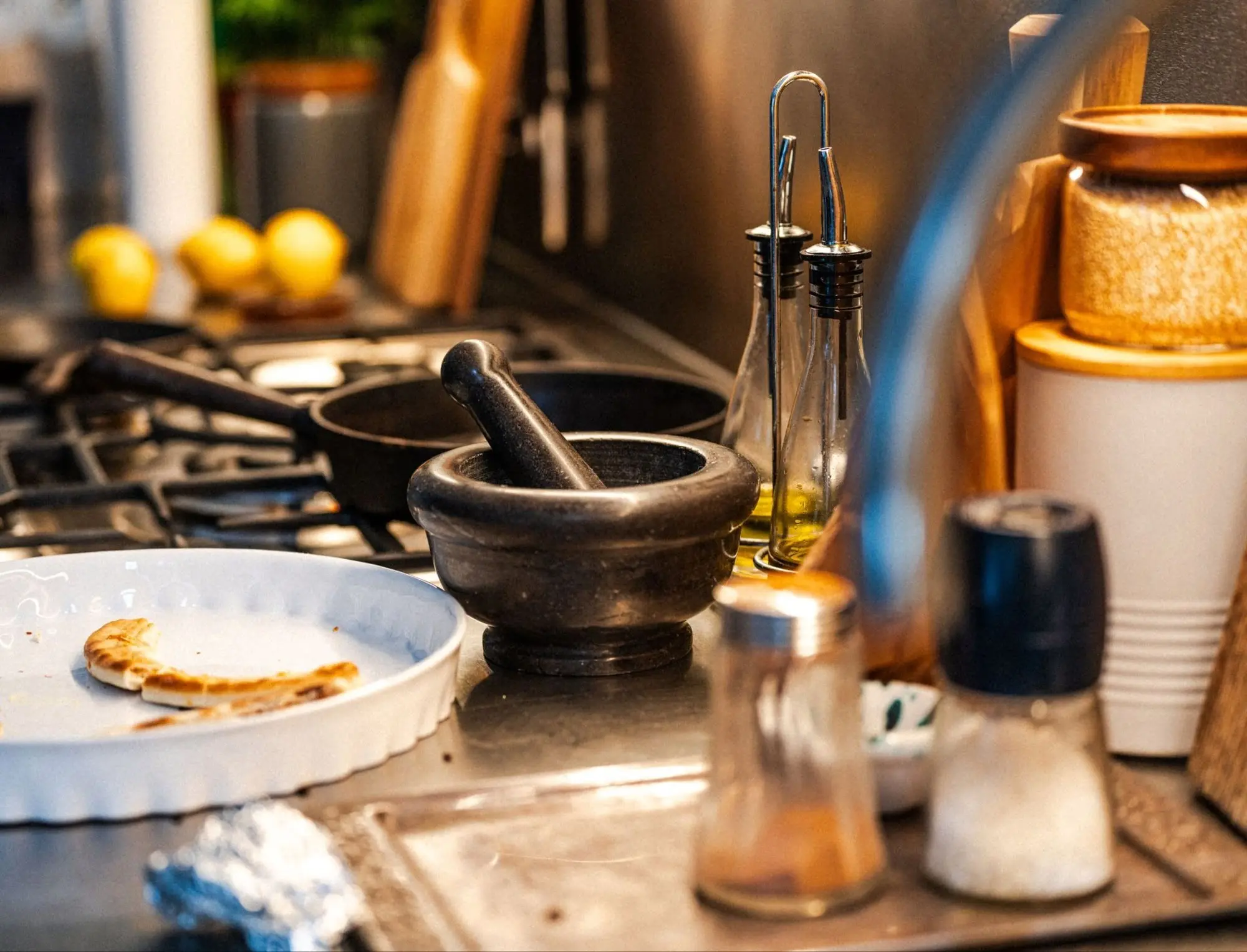
Everyone knows kitchens can get messy. Kitchen cabinets can collect a surprising amount of grease from everyday cooking. Over time, that grease mixes with dust and leaves behind a sticky film that a quick wipe won’t always remove.
The good news is that there are simple solutions for cleaning this stuck-on grease. A warm water mix with a little dish soap, vinegar, or baking soda can be effective for mild to moderate buildup. However, heavier grease messes may require variations in cleaning approach and soak time.
This blog covers the easiest methods on how to clean grease off cabinets, along with a few tips to help prevent buildup. If you’d prefer to leave the cleaning to someone else, Busy Bee Cleaning Company serves Chester County, PA, and can take care of the job for you.
Why Does Grease Build Up on Kitchen Cabinets?
Cooking sends tiny drops of oil and grease into the air, especially when you’re frying, roasting, or cooking over high heat. Those particles settle on nearby surfaces, including cabinet doors, handles, and the area around the stove. Cabinets near the stovetop tend to collect grease the fastest because they’re exposed to cooking fumes and get plenty of daily use.
Once grease settles on a cabinet, it can quickly pick up dust, food particles, and fingerprints. Over time, this creates a sticky film that can dull the finish and become harder to remove. Regular kitchen cleaning helps keep that buildup under control and makes the maintenance much easier.
What You’ll Need to Clean Grease Off Kitchen Cabinets
Before you get started, gather a few basic supplies. You probably already have most of them at home: warm water, dish soap, white vinegar, baking soda, microfiber cloths or soft sponges, an old soft-bristled toothbrush, two bowls or spray bottles, and a dry towel.
For tougher grease, baking soda can help loosen the buildup. A toothbrush works well for cabinet grooves and around hardware. Skip abrasive scrubbers, steel wool, and harsh cleaners. They can scratch the surface or damage the finish, especially on wood and laminate cabinets.
Step-by-Step Guide: How to Clean Grease Off Kitchen Cabinets
Step 1: Mix Your Cleaning Solution
Mix warm water with a few drops of dish soap in a bowl or spray bottle. You can also use equal parts warm water and white vinegar. Both options can cut through everyday grease without being too harsh on most cabinet finishes.
Step 2: Test on a Small, Hidden Area
Before cleaning the whole cabinet, test your solution somewhere that’s easy to hide, such as the inside edge of a door. This helps make sure the cleaner won’t damage or discolor the finish.
Step 3: Apply the Solution
Dip a microfiber cloth into the solution and wring it out well. The cloth should be damp, not soaking wet. Too much water can get into seams and cause damage, especially with wood cabinets.
Step 4: Wipe in Circular Motions
Gently wipe greasy areas with small, circular motions. Start with the cabinets closest to the stove since they usually collect the most grease. Don’t scrub too hard, especially on painted or finished surfaces.
Step 5: Tackle Stubborn Grease with Baking Soda
For grease that won’t come off easily, mix baking soda with a small amount of water to make a paste. Apply it to the spot and let it sit for five to 10 minutes. Then gently wipe it away with a soft cloth or toothbrush.
Step 6: Clean Handles, Knobs, and Grooves
Don’t forget the small spaces where grease tends to collect. Use an old, soft toothbrush with your cleaning solution to clean around handles, knobs, edges, and decorative grooves.
Step 7: Rinse with a Damp Cloth
After removing the grease, wipe the cabinets with a clean cloth dampened with plain water. This removes any leftover soap or vinegar that could leave a film or dull the finish.
Step 8: Dry Immediately
Finish by wiping the cabinets with a dry towel. Getting rid of leftover moisture is especially important with wood cabinets, since too much water can lead to swelling, warping, or discoloration.
How to Prevent Grease Buildup on Kitchen Cabinets
Cleaning grease is much easier when you don’t let it sit and harden. A few simple habits can keep your cabinets looking cleaner between deep cleanings.
Use your range hood or exhaust fan whenever you cook, especially when frying or sautéing. Give the cabinets near your stove a quick wipe with a damp microfiber cloth once a week, and clean up any spills as soon as they happen. Covering pans when frying can also keep grease from spreading through the air and settling on your cabinets.
For wood cabinets, you can also use a cabinet-safe wax or polish from time to time. It can add a layer of protection and make future cleaning easier.
When to Call a Professional Cleaning Service
Cleaning the kitchen yourself can be overwhelming and hard to keep up with. If grease has built up for months or years, your cabinets have started to discolor, or you simply don’t have the time for a deep clean, a professional cleaning service can save you time and help prevent damage.
Busy Bee Cleaning Company provides residential cleaning services throughout Chester County, PA, including detailed kitchen cleaning. Their team can clean cabinets, stovetops, sinks, and other areas where grease and grime tend to build up.
Keep Your Kitchen Cabinets Looking Their Best
Grease buildup can happen slowly, but once it gets bad, it can be a pain to clean. A simple cleaning routine and the right products can help keep your cabinets looking fresh and make deep cleaning much easier.
Don’t have the time or energy to tackle it yourself? Busy Bee Cleaning Company provides residential cleaning services across Chester County, PA, including kitchens, cabinets, and countertops. Contact Busy Bee Cleaning Company to schedule a cleaning and let someone else handle the scrubbing.